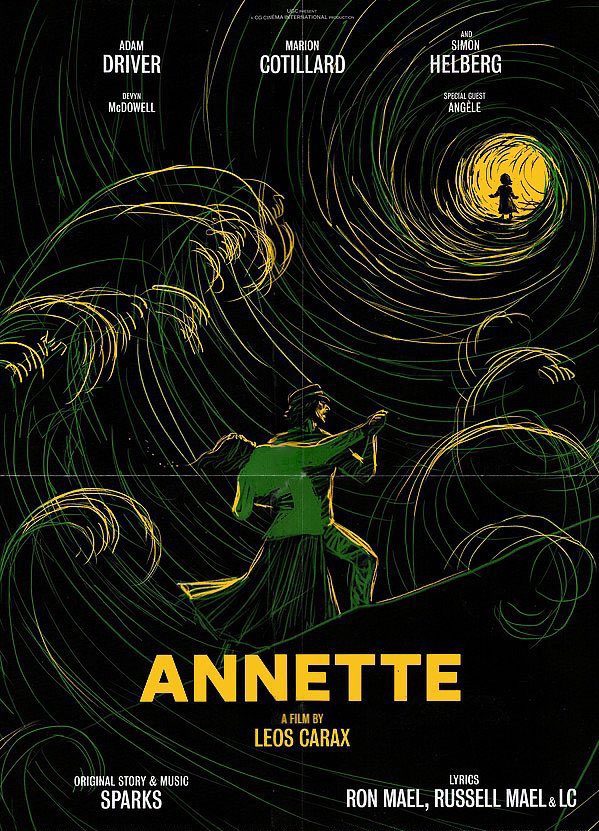
Leos Carax's film, in which the end of the story isn't the end of it — everybody sets their own.
This is long overdue, but the film needed the time.
It wouldn't be hard to write the moral version, where the hero has nobody to blame but himself — except that goes against the grain of the thing: you're no innocent either, and the story is nowhere near as simple as it first looks.
You have to decide whether you're willing to be complicit in it. If not, leave at the director's first words, because none of what follows will depend on you.
You can feel as much as you like that the ground is going out from under Adam Driver's character, but coming out clean yourself, from water only slightly less muddy, doesn't work.
You're in the room already, and which part is performance and which part is life is something you'll work out later, because Annette will dissolve into everyone and everything, and the end of the film isn't the end of her.
Everybody sets their own. The time comes, and there's no stopping it or even noticing it — much as there's no noticing the circumstances that walked you to the point where the roads run out.
As usual nobody answers who's to blame or what's to be done — and it would feel strange, I think, for Carax to have done it any other way. Everything has been said, and every time it comes out less obvious than it should.
Music and screenplay by the band Sparks; Carax won Best Director at Cannes 2021.
Kinopoisk →Elia Suleiman made a film whose hero changes almost nothing — which is exactly what leaves you alone with your own conclusions.
Natalia Kudryashova's film — written in verse, about a city held down by snow, and about whether you're ready to get off the ground.
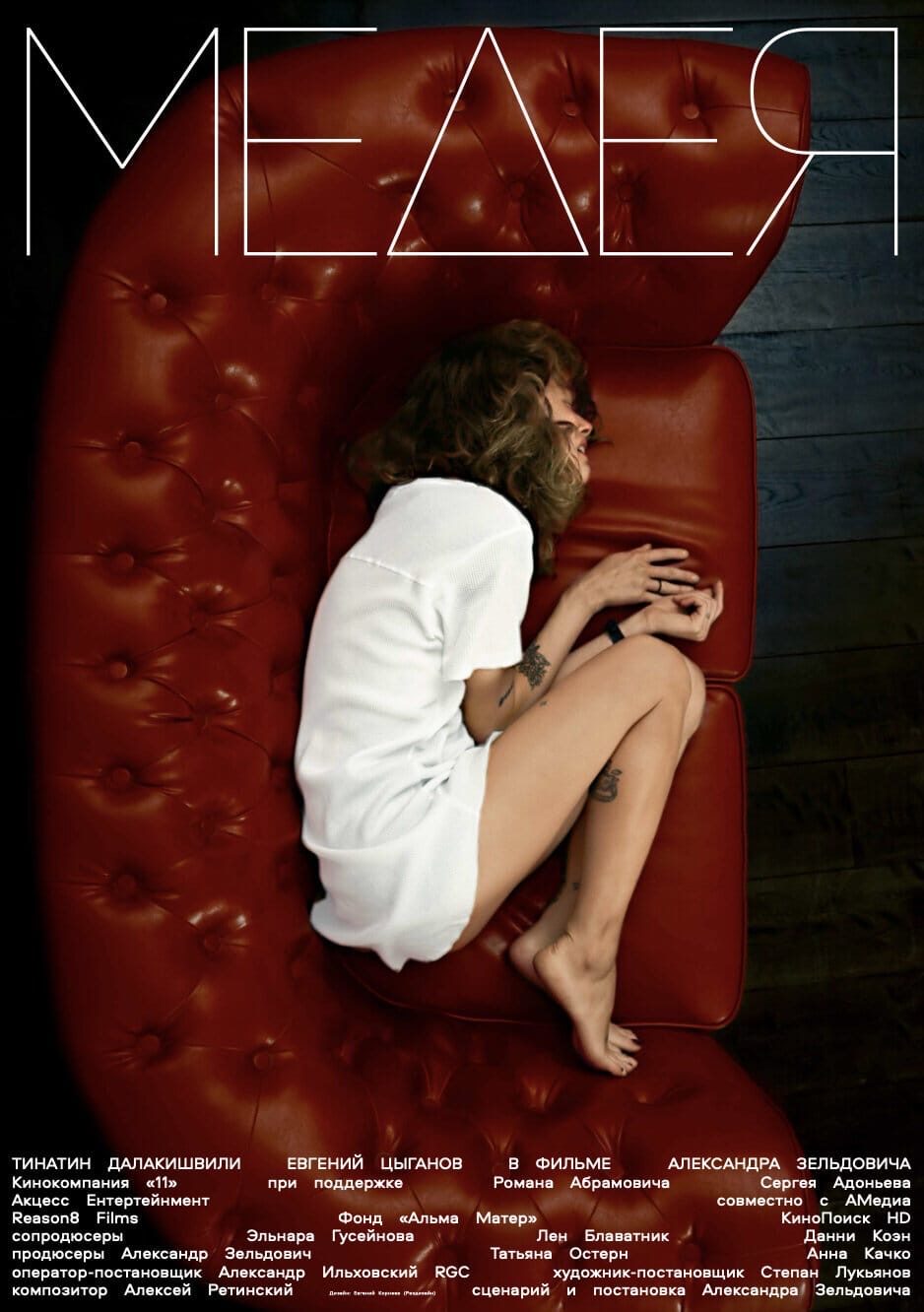
Alexander Zeldovich's film, where the words don't compete with the music — and one question is left standing: do you understand me?
What did you think of this text?
New texts go out on the Telegram channel — no algorithm, no feed.