Play
"Beware of Pity" and "Close People" — When the Director Beats the Text, and When He Doesn't
McBurney got the better of Zweig without quite showing how. Bondar didn't get the better of Vodolazkin, or of the small stage either.
There are directors you want to beg not to take on serious literary texts, because more often than not they can't carry it: they go down under the weight of the metaphors. The aim shouldn't be retelling a story you liked but making your own out of it. And if the author doesn't like the result, so be it — authors rarely like anything.
In "Beware of Pity," Simon McBurney got the better of Zweig's masterful novel. The rhythm of the action holds, and you could feel the director talking about his own damage. I still couldn't quite trace the construction and see how it was made.
In the new "Close People" on the small stage of the TYuZ, by contrast, everything is clear. Too clear, which is what makes it dull. Elizaveta Bondar, a young director, was struck by Evgeny Vodolazkin's prose and wanted to turn it into a play. What came out is sort of contemporary, sort of fashionable, sort of a transformed-space piece.
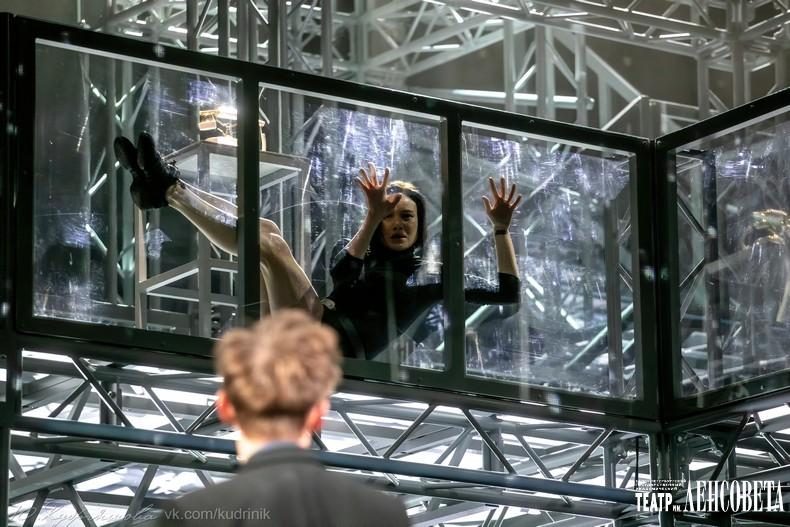
At the start we were shut into a room with transparent windows, with the action taking place behind them; the audience sat on swivel chairs and could turn freely while waiting for the actors to move. And they moved endlessly, for no reason I could establish — to liven it up, presumably.
In all that movement the director seems to have forgotten it needs some justification, some working out. As though counting on the audience not noticing the gaps, the actors kept changing the rhythm of their movement in ways plainly not meant for this stage. Bondar took on the genuinely large space of the small stage and couldn't handle it either, sending everyone running back and forth to no visible end.
With bad productions you start mentally supplying your own solutions almost immediately. Here almost nothing worked for me. There was one strong moment, a repeated line, and even that was eventually smothered under an endless stream of text.
As they used to say at the coat check: the form has squeezed out the content. Except I'm afraid there wasn't any form here either — it was added for the makers' own pleasure. This would have been far more interesting as a staged reading, which is what I keep recommending to myself and to you: whatever can be cut should be.
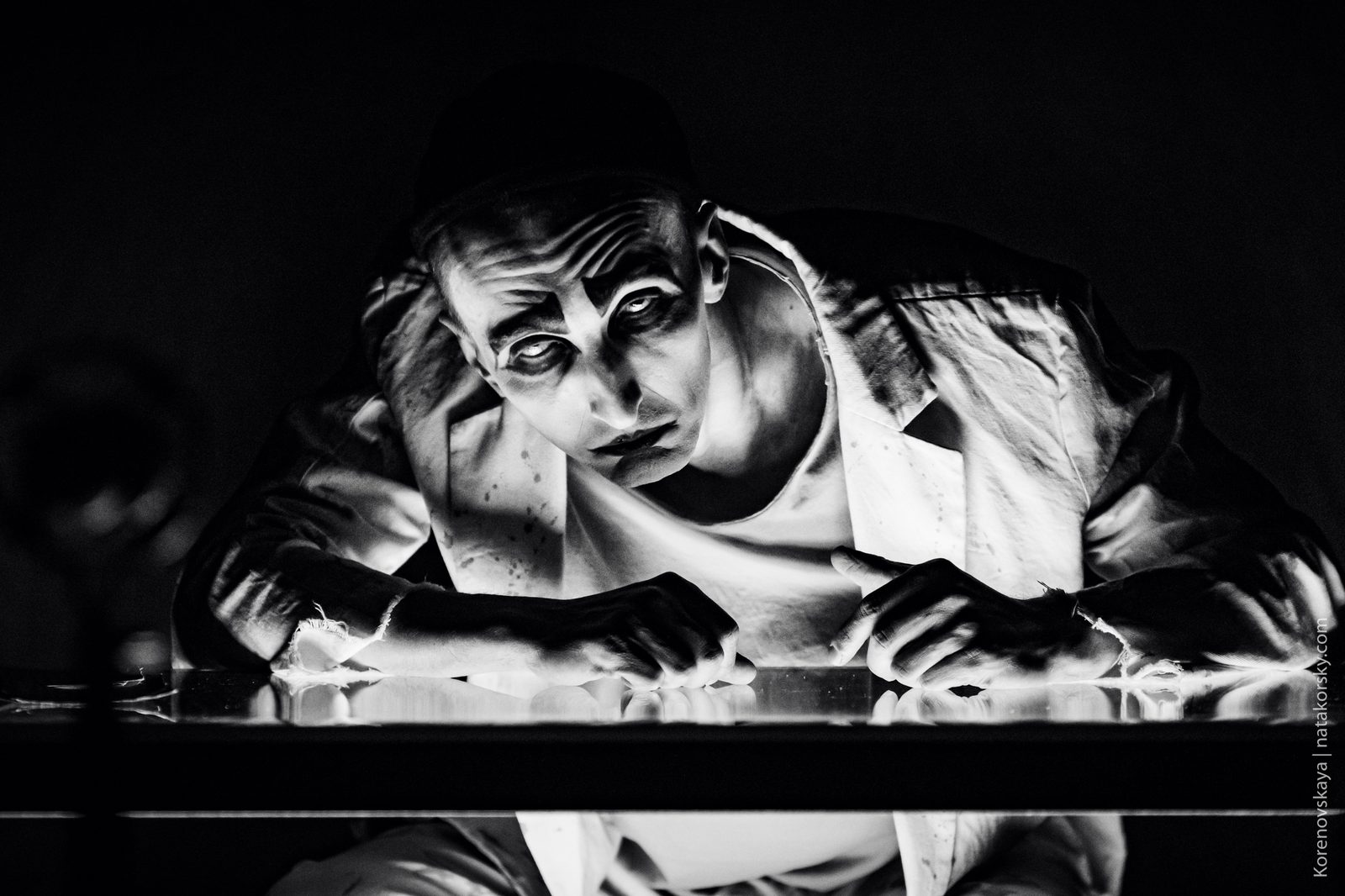
P.S. The photograph is from Simon McBurney's "Beware of Pity."